

According to recent industry data, businesses experience an average of 261 days of downtime per year due to IT failures, with the average cost of downtime reaching $5,600 per minute. This statistic underscores why selecting the right Windows server support provider is not merely an operational preference but a critical financial safeguard for enterprise continuity. As organizations migrate hybrid workloads to cloud environments while maintaining on-premise infrastructure, the complexity of managing Windows Server ecosystems has intensified. The right partner must offer more than reactive break-fix services; they must provide proactive architectural oversight, rigorous security compliance, and seamless scalability. This guide outlines the essential criteria for evaluating potential technology partners to ensure your business infrastructure remains resilient, secure, and optimized for growth.
Proactive Monitoring and Response Protocols
Windows Server support is fundamentally about preventing failure before it impacts your bottom line. A competent provider must utilize advanced monitoring tools that track server health, disk space, memory usage, and application performance in real time. Reactive support is a relic of the past; modern IT demands predictive maintenance. When a provider monitors your environment continuously, they can identify anomalies such as unusual login patterns or resource bottlenecks before they escalate into critical outages.
Look for providers who offer 24/7 monitoring capabilities. Downtime does not adhere to business hours, and a provider that only operates during standard office hours leaves your business vulnerable during nights, weekends, and holidays. The best MSPs deploy automated alerts that trigger immediate technician intervention, often resolving issues before your staff even notices a glitch. This level of vigilance ensures that your Windows Server infrastructure remains stable and responsive, directly contributing to operational efficiency and employee productivity.
Security Posture and Compliance Expertise
Windows Server environments are prime targets for cyberattacks, including ransomware, phishing, and data breaches. Your support provider must possess deep expertise in cybersecurity frameworks and compliance standards relevant to your industry. Whether you are in healthcare, finance, or general commerce, your provider should understand the specific regulatory requirements that govern your data.
Effective security support includes regular patch management, vulnerability assessments, and endpoint protection. A robust provider will implement multi-factor authentication (MFA), encryption protocols, and intrusion detection systems to safeguard your digital assets. Furthermore, they should offer disaster recovery planning that includes regular backup testing. The 3-2-2 backup strategy is a widely accepted industry standard that ensures data resilience by keeping three copies of data, on two different media types, with one copy off-site. Ensuring your provider adheres to such rigorous backup protocols is non-negotiable for business continuity.
Technology Relocation and Migration Capabilities
Businesses evolve, and physical office spaces change. When you move to a new location, your technology infrastructure must move with you seamlessly. A common pitfall in office relocations is the disruption of IT services, leading to days of lost productivity. A superior Windows server support provider should offer end-to-end technology relocation services that minimize downtime during the transition.
This service involves pre-visit assessments of the new site to ensure network readiness, careful planning of cabling and server rack layouts, and the physical transportation of hardware. The provider should also handle the reconfiguration of network locations, ensuring that all servers, workstations, and peripherals are operational immediately upon arrival. By choosing a partner with proven relocation expertise, you avoid the chaos of a disjointed move and ensure that your business operations continue without interruption. TECHtality specializes in these complex transitions, guiding clients from initial planning to final setup with precision.
Unified Communications and VoIP Integration
Modern business communication relies heavily on Voice over Internet Protocol (VoIP) systems integrated with Windows Server environments. Legacy PBX systems are expensive to maintain and difficult to scale. A forward-thinking support provider should offer managed VoIP PBX services that leverage your existing internet infrastructure to reduce costs and enhance functionality.
Hosted VoIP solutions eliminate the need for physical phone hardware and reduce maintenance costs significantly. They provide enterprise-level features such as auto-attendants, call routing, and mobile integration, which are essential for modern workforce flexibility. Your provider should be able to manage the migration from legacy systems to cloud-based VoIP, ensuring that your communication lines remain clear and reliable. This integration is crucial for maintaining customer service standards and internal collaboration across distributed teams.
Managed Services vs. Break-Fix Models
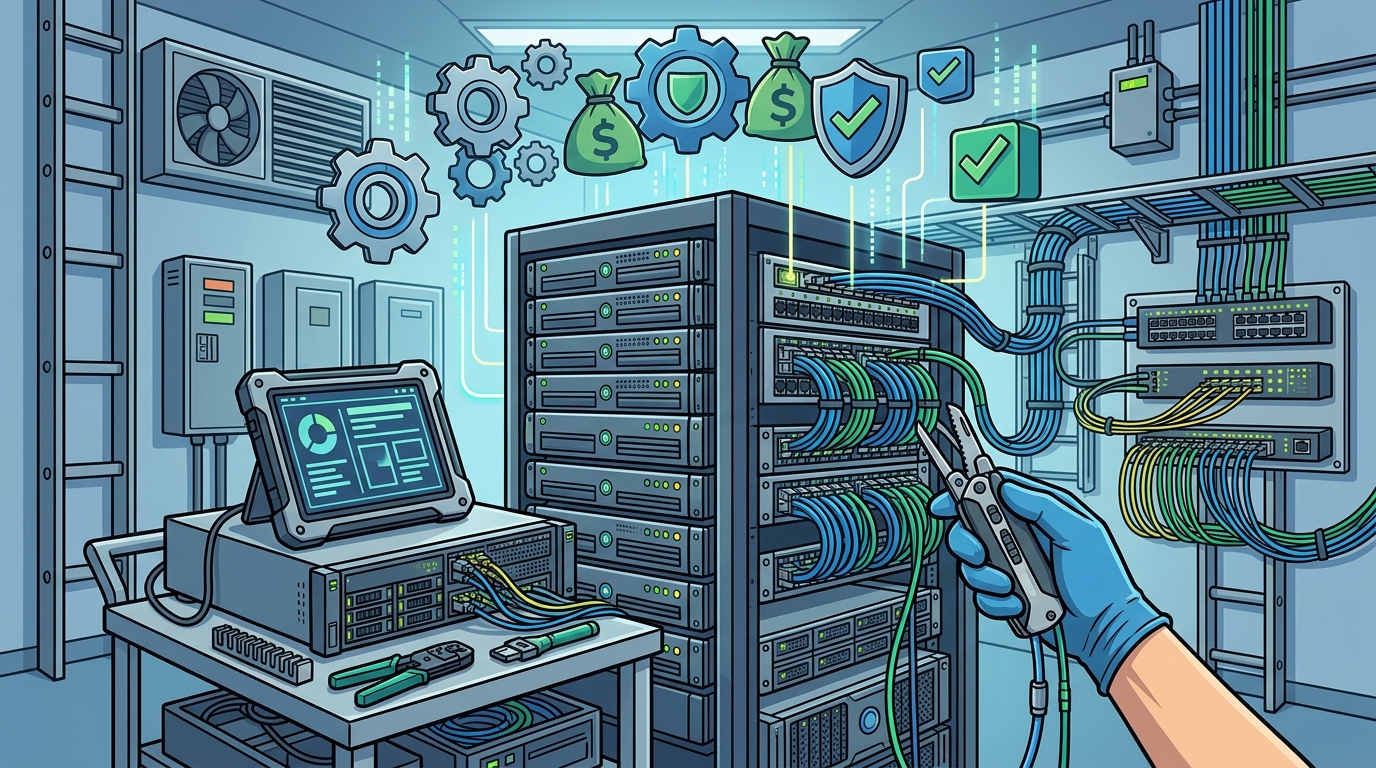
Understanding the difference between Managed Services (MSP) and Break-Fix models is critical when selecting a provider. The Break-Fix model operates on a reactive basis; you pay only when something breaks. While this may seem cost-effective initially, it often leads to unpredictable expenses and prolonged downtime. In contrast, an MSP model provides proactive, comprehensive support for a predictable monthly fee.
Managed Services include regular maintenance, security updates, and priority support, which collectively reduce the likelihood of costly emergencies. This model aligns the provider's incentives with your business success, as they are motivated to keep your systems running smoothly to avoid service calls. For businesses seeking stability and budget predictability, the MSP model is the superior choice. It transforms IT from a cost center into a strategic partner that actively contributes to your operational resilience.
Remote Office and Distributed Team Support
In an era of hybrid work and multi-location enterprises, supporting remote offices is a key differentiator among IT providers. If your business has branch offices in different states or regions, your primary provider must offer robust remote support capabilities. This includes the ability to diagnose and resolve issues on remote servers and workstations without the need for physical presence.
Effective remote support relies on secure remote desktop tools and a deep understanding of network architecture across different geographic locations. Your provider should have established protocols for supporting remote branches, ensuring that they receive the same level of service as your headquarters. This capability is essential for maintaining consistency in IT policies, security standards, and user experience across your entire organization. Providers who excel in this area can significantly reduce travel costs and response times for distributed teams.
Final Vendor Selection Checklist
When evaluating potential Windows server support providers, use the following checklist to ensure you make an informed decision. This table summarizes the key comparison points to help you weigh your options effectively.
| Criteria | Key Questions to Ask | Why It Matters |
|---|---|---|
| Experience & Longevity | How many years has the provider been in business? Do they have specific experience with Windows Server? | Longevity indicates stability and accumulated expertise in handling complex server environments. |
| Service Scope | Do they offer both on-site and remote support? Do they handle VoIP and network cabling? | A comprehensive service provider reduces the need for multiple vendors, simplifying management. |
| Security Protocols | What is their approach to backups and disaster recovery? Do they follow the 3-2-2 rule? | Rigorous security practices protect your business from data loss and cyber threats. |
| Relocation Expertise | Can they manage technology moves for new office spaces? | Seamless relocation prevents operational downtime during business growth phases. |
| Client References | Can they provide testimonials from similar-sized businesses? | Real-world feedback validates their claims and service quality. |
Key Takeaways
- Proactive Monitoring: Always prioritize providers who offer 24/7 proactive monitoring to prevent downtime before it occurs.
- Security First: Ensure your provider has a robust security framework, including regular patching and the 3-2-2 backup strategy for data resilience.
- Comprehensive Services: Look for a partner who handles not just servers, but also VoIP, cabling, and network installations.
- Relocation Support: Verify their capability to manage technology relocations to minimize business disruption during moves.
- Remote Capabilities: Confirm their ability to support remote offices and distributed teams effectively.
- Managed Services Model: Choose MSP over Break-Fix for predictable costs and strategic IT partnership.
- Local Expertise: For businesses in Arizona, a local provider like TECHtality offers immediate on-site support and regional understanding.
Frequently Asked Questions
What is the difference between Managed Services and Break-Fix?
Managed Services provide proactive, comprehensive IT support for a fixed monthly fee, focusing on prevention and optimization. Break-Fix is a reactive model where you pay only when issues arise, which can lead to unpredictable costs and longer resolution times.
How does a provider handle technology relocation?
A qualified provider will conduct a pre-visit assessment of your new site, plan the cabling and server layout, physically move your equipment, and ensure all systems are operational and configured correctly upon arrival to minimize downtime.
Why is VoIP integration important for Windows Server environments?
VoIP integration allows businesses to leverage their existing network infrastructure for communication, reducing hardware costs and enabling advanced features like call routing and mobile integration. It requires careful management to ensure voice quality and reliability.
What is the 3-2-2 backup strategy?
The 3-2-2 backup strategy is a data protection method that involves keeping three copies of data, on two different types of media, with one copy stored off-site. This ensures maximum data recovery options in the event of a disaster.
Can a remote provider support my local business effectively?
While remote support is powerful, a hybrid approach is often best. A provider with local presence can offer immediate on-site assistance for hardware issues, while remote tools handle software and network diagnostics efficiently.
What should I look for in a provider's security practices?
Look for regular patch management, multi-factor authentication implementation, intrusion detection systems, and clear disaster recovery plans. The provider should also be knowledgeable about industry-specific compliance requirements.
How do I know if my current provider is proactive?
A proactive provider will regularly communicate with you about system health, propose improvements, and resolve issues before they impact your business. They will also provide detailed reports on monitoring and maintenance activities.
Ready to Secure Your Infrastructure?
Choosing the right Windows server support provider is a strategic decision that impacts your business's security, efficiency, and growth potential. Do not settle for reactive support when you can have a proactive partner dedicated to your success. Contact TECHtality today to schedule a consultation and discover how our comprehensive managed services can transform your IT operations.