

Effective workstation management is the backbone of operational continuity for modern enterprises. According to recent industry data, businesses that implement rigorous IT support standards see a significant reduction in unplanned downtime, which directly correlates to higher revenue retention and employee productivity. For organizations in the Phoenix metropolitan area, relying on a trusted technology partner ensures that every device, from workstations to servers, operates at peak performance. This guide outlines the essential strategies for maintaining a secure, efficient, and scalable IT environment.
Understanding Workstation Management
Workstation management refers to the systematic administration of individual computer systems within a business network. Workstation management is the centralized oversight of hardware, software, and security policies across all employee devices. This process ensures that every team member has access to the tools they need without compromising the integrity of the broader network. (Business Technology Services In)
For businesses in Arizona, the scope of this management extends beyond simple troubleshooting. It involves proactive monitoring, regular updates, and strategic planning for technology relocation. When you partner with a dedicated service provider, you gain access to experts who understand the unique challenges of local business operations. From Scottsdale to Chandler, maintaining a consistent standard of care is vital for competitive advantage. (Technology Services All your)
Effective management begins with a clear inventory of all assets. Knowing exactly what hardware is in use, where it is located, and who is using it allows for better resource allocation. This visibility is crucial for identifying bottlenecks before they impact productivity. By leveraging managed service provider (MSP) solutions, companies can automate many of these routine tasks, freeing up internal resources to focus on core business goals.
Security and Backup Strategies
Security is the most critical component of workstation management. As cyber threats evolve, so must the defenses protecting your data. A robust security posture includes endpoint protection, regular patch management, and strict access controls. Endpoint protection is the first line of defense against malware, ransomware, and unauthorized access attempts.
One of the most effective frameworks for data protection is the 3-2-2 backup rule. This strategy dictates that you should have three copies of your data, stored on two different media types, with one copy kept off-site. This approach minimizes the risk of data loss due to hardware failure, natural disasters, or cyberattacks. For businesses in Arizona, where environmental factors can also impact infrastructure, having a reliable off-site backup is essential.
Regular software updates are another non-negotiable aspect of security. Outdated software often contains known vulnerabilities that attackers can exploit. By keeping all workstations updated with the latest security patches, you significantly reduce the attack surface. This process is often automated through managed services, ensuring that no device is left behind.
Additionally, employee training plays a pivotal role in security. Even the best technical controls can be undermined by human error. Regular training on phishing awareness and safe browsing habits empowers your team to be active participants in your security strategy. This cultural shift is just as important as the technical infrastructure itself.
Network Infrastructure and Connectivity
A well-managed network is the foundation upon which all workstations operate. This includes the physical cabling, wireless access points, and routing equipment that connect your devices to the internet and each other. Network infrastructure is the underlying system of hardware and software that enables data transmission across your business environment.
Wireless connectivity is particularly important for modern workplaces. Employees expect seamless access to resources from anywhere in the office. Proper placement of wireless access points ensures consistent coverage and minimizes dead zones. This requires careful planning and regular testing to maintain optimal performance.
For businesses undergoing expansion or relocation, network infrastructure becomes even more critical. Moving your office requires more than just packing up computers. It involves planning the new network layout, installing new cabling, and ensuring that all devices are operational in the new location. TECHtality specializes in these end-to-end technology services, ensuring a smooth transition with minimal downtime.
Furthermore, the integration of VoIP phone systems can streamline communications. By moving away from legacy PBX systems to hosted VoIP solutions, businesses can save on hardware costs and gain access to advanced features. This shift also allows for greater flexibility, enabling employees to make and receive calls from any device with an internet connection.
Hardware Lifecycle and Optimization
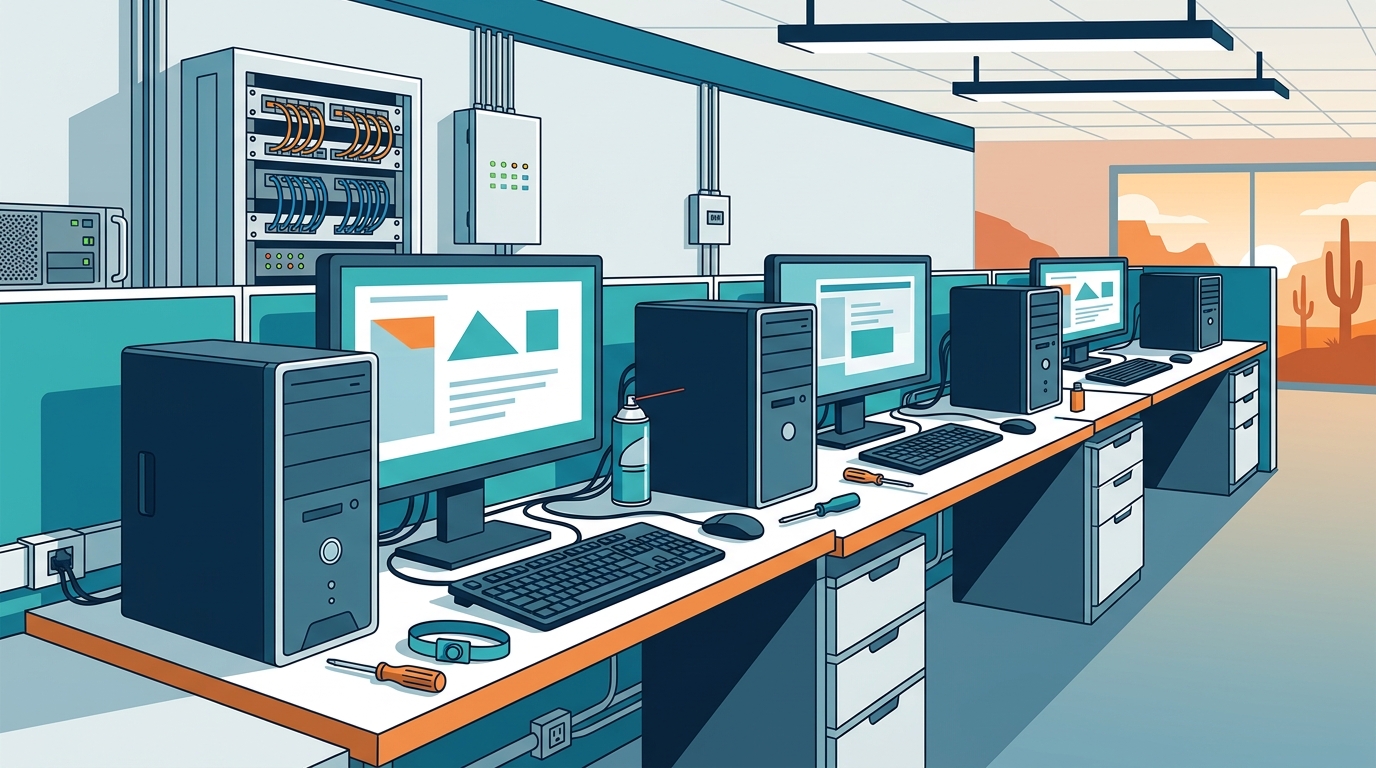
Managing the lifecycle of your hardware is key to maintaining performance and controlling costs. Workstations have a finite lifespan, and pushing them beyond their optimal use can lead to decreased productivity and increased maintenance costs. Hardware lifecycle management is the process of planning, acquiring, deploying, and retiring computer equipment to maximize value and performance.
Regular optimization of existing hardware can extend its useful life. This includes cleaning physical components, updating drivers, and removing unnecessary software. For older machines, upgrading components like RAM or switching to solid-state drives can provide a significant performance boost at a fraction of the cost of a new system.
When it is time to replace hardware, proper disposal and data wiping are essential. You must ensure that all sensitive data is securely erased from old devices to prevent data breaches. This process is often handled by professional IT services as part of the technology relocation or upgrade process.
Planning for hardware upgrades should be a continuous process, not a reactive one. By tracking the age and performance of your workstations, you can budget for replacements in advance. This proactive approach prevents emergency purchases and allows for better financial planning.
Remote Support and On-Site Response
In today's hybrid work environment, the ability to provide rapid support is crucial. Remote support tools allow technicians to diagnose and resolve issues without being physically present. This reduces downtime and allows employees to get back to work quickly. Remote support services enable IT professionals to troubleshoot and fix technical issues from a distance, minimizing business disruption.
However, remote support is not a replacement for on-site assistance. Complex hardware issues, network installations, and technology relocations require physical presence. A combination of both remote and on-site services provides the most comprehensive support model.
For businesses with remote offices or branch locations, having a local partner is invaluable. TECHtality offers remote office services, providing on-site local support for corporate offices in other states. This ensures that your remote teams receive the same level of care and attention as your main office.
Response time is a critical metric for any IT service provider. Having a dedicated contact, such as a specific technician, can improve communication and trust. When you know who to call and that they understand your specific needs, you can resolve issues more efficiently. This personalized approach is a hallmark of high-quality managed services.
Key Takeaways
- Proactive Management: Regular monitoring and updates prevent most common workstation issues before they occur.
- Security First: Implementing endpoint protection and the 3-2-2 backup rule is essential for data integrity.
- Network Reliability: Proper wireless access point placement and cabling are vital for consistent connectivity.
- Hardware Lifecycle: Planning for hardware upgrades and proper disposal protects your budget and data.
- Hybrid Support: Combining remote tools with on-site expertise ensures comprehensive coverage for all employees.
- Local Expertise: Partnering with an Arizona-based provider like TECHtality ensures understanding of local business needs.
- Technology Relocation: Professional planning for office moves minimizes downtime and ensures seamless transitions.
Frequently Asked Questions
What is the 3-2-2 backup rule?
The 3-2-2 backup rule is a data protection strategy that involves keeping three copies of your data, stored on two different types of media, with one copy kept off-site. This method significantly reduces the risk of data loss.
How does managed service provider (MSP) support help with workstation management?
An MSP provides proactive monitoring, regular updates, and rapid response to technical issues. This allows your business to focus on growth while experts handle the complexities of IT infrastructure.
Why is technology relocation important for growing businesses?
Technology relocation ensures that all your IT assets are moved safely and set up correctly in your new location. This minimizes downtime and ensures that your team can resume work immediately.
What are the benefits of hosted VoIP over legacy PBX systems?
Hosted VoIP eliminates the need for expensive hardware, reduces maintenance costs, and offers greater flexibility for remote workers. It also provides access to advanced features not available in traditional systems.
How can remote support reduce business downtime?
Remote support allows technicians to diagnose and fix issues instantly without waiting for an on-site visit. This rapid response time keeps employees productive and reduces the impact of technical problems.
What should I consider when planning a hardware upgrade?
Consider the age of the current hardware, the performance needs of your employees, and the total cost of ownership. Upgrading components like RAM or SSDs can often extend the life of existing machines.
Does TECHtality support businesses outside of Arizona?
Yes, TECHtality offers remote office services for businesses with branch locations in other states, providing on-site local support to ensure consistent service quality.
Contact TECHtality for Expert Workstation Management
Managing business workstations effectively requires expertise, resources, and a proactive approach. TECHtality has been supporting Arizona businesses since 1983, providing comprehensive IT services that keep your technology running smoothly. From computer repairs to network installations and technology relocation, we are your trusted partner for all your tech needs.
Don't let technical issues slow down your business. Contact TECHtality today to schedule an appointment and learn how our managed services can help you achieve your goals. Call us at (480) 988-0900 or visit our contact page to get started.