

Measurable Benefits and Cost Savings From a VoIP Office Migration
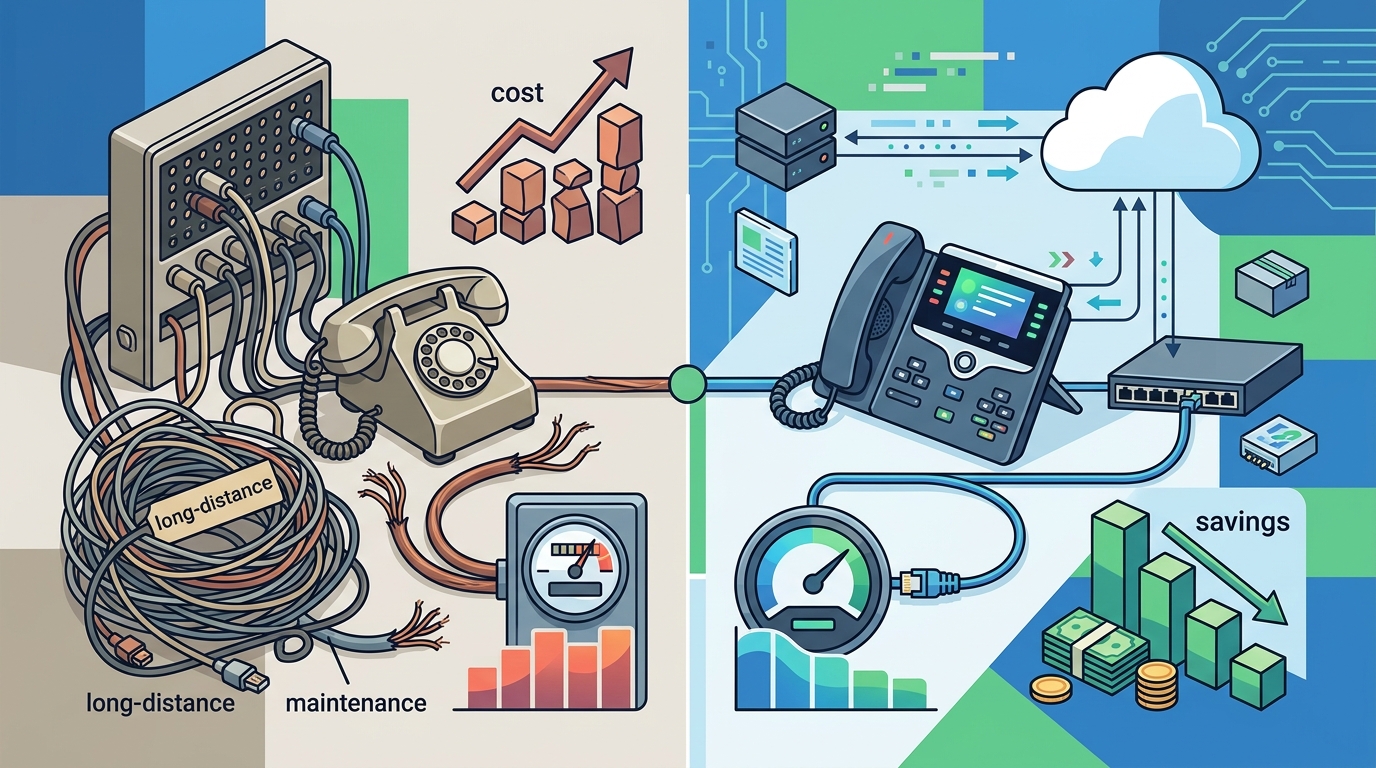
Transitioning from legacy telephone systems to Voice over Internet Protocol (VoIP) is no longer just a technological upgrade; it is a fundamental financial strategy for modern enterprises. According to recent industry analyses, businesses that migrate to cloud-based communication platforms typically realize a reduction in telecommunications expenditures by approximately 30 to 50 percent within the first year of deployment. This dramatic shift in operational overhead is driven by the elimination of costly hardware maintenance, the removal of per-minute long-distance charges, and the consolidation of multiple communication channels into a single unified platform. For organizations in Arizona and beyond, understanding the precise mechanics of these savings is critical to justifying the initial migration effort.
Understanding VoIP and Legacy PBX Differences
To grasp the magnitude of cost savings, one must first understand the architectural differences between traditional telephony and modern IP-based solutions. Legacy Private Branch Exchange (PBX) systems are physical hardware installations that require dedicated copper phone lines, substantial power consumption, and specialized maintenance. These systems are often prone to noise interference and are notoriously difficult to reroute during emergencies or network outages. In contrast, VoIP leverages existing internet infrastructure to transmit voice data as digital packets, effectively decoupling communication from physical location constraints.
VoIP is a technology that allows voice communications to be transmitted over the internet rather than through traditional telephone lines. This fundamental shift eliminates the need for extensive physical cabling and dedicated hardware racks. By utilizing state-of-the-art PBX infrastructure hosted by providers like TECHtality, businesses can access enterprise-level features without the capital expenditure of owning the underlying hardware. The majority of businesses have started to make the switch to a hosted VoIP solution for a more upgraded, tech-forward system that is feature-packed and scalable.
Direct Cost Savings and Hardware Reduction
The most immediate impact of a VoIP migration is visible in the monthly telecommunications bill. Traditional phone services often charge for local, long-distance, and international calls separately, with additional fees for features like call forwarding or voicemail-to-email. Hosted VoIP services typically offer a flat monthly rate that includes unlimited calling and a comprehensive suite of features. For example, TECHtality provides Business Class VoIP Hosting Services at competitive rates, such as $29.99 per month for hosted enterprise voice, which includes fax-to-email capabilities for an additional nominal fee.
Beyond monthly service fees, the reduction in hardware costs is substantial. Legacy PBX systems require regular software upgrades, hardware replacements, and physical maintenance that can cost hundreds or thousands of dollars annually. By switching to a hosted solution, businesses can throw away their old internal PBX and save both space and power. This transition also eliminates the maintenance costs for software upgrades, adds, moves, and changes, which are handled entirely by the service provider.
| Cost Factor | Legacy PBX System | Hosted VoIP Solution |
|---|---|---|
| Hardware Acquisition | High upfront capital expenditure | Minimal (IP phones only) |
| Maintenance & Repairs | Expensive and frequent | Included in service fee |
| Long-Distance Charges | Per-minute or tiered pricing | Unlimited included |
| Scalability Costs | High (new hardware required) | Low (software extension) |
| Power Consumption | Significant | Negligible |
Operational Efficiency and Remote Work Enablement
Cost savings extend beyond direct financial metrics to include operational efficiency gains. VoIP systems enable seamless integration with other business applications, such as Customer Relationship Management (CRM) tools and email platforms. This integration reduces the time employees spend switching between applications and improves data accuracy. Furthermore, VoIP supports mobility, allowing employees to use their business number on any device, including smartphones and laptops, regardless of their physical location.
This flexibility is crucial for modern workforce dynamics. With TECHtality's remote office services, businesses can provide comprehensive on-site local support for remote branch locations, ensuring that distributed teams remain connected and productive. The ability to add or remove services at any time with zero hassles allows companies to scale their communication infrastructure up or down based on seasonal demands or organizational changes, avoiding the waste associated with over-provisioned legacy systems.
The Technology Relocation Process
One of the most significant barriers to VoIP adoption is the perceived complexity of migration. However, professional service providers streamline this process to minimize downtime and disruption. Technology relocation involves pre-visiting the new location to ensure it is ready for the business's technology, adding network locations, or rewiring the office as needed. This end-to-end service ensures that every detail is meticulously handled, from planning to execution.
TECHtality specializes in providing end-to-end technology services to ensure a seamless transition. As your dedicated technology relocation experts, we guide you from the initial planning stages to the final setup, ensuring that all your technology is precisely where you want it and operating at your best. Our focus is on precision and efficiency, understanding the importance of downtime minimization during relocations. We can safely move all your equipment and make sure it is operational, making your move a smooth transition for everyone.
The migration process typically includes:
- Assessment: Evaluating current infrastructure and identifying necessary upgrades.
- Planning: Designing the new network layout and configuring routers, switches, and firewalls.
- Implementation: Installing wireless access points (WAP) and ensuring optimal Wi-Fi coverage.
- Testing: Verifying call quality, feature functionality, and network stability.
- Training: Educating staff on new features and best practices for VoIP usage.
Security and Reliability Considerations
Security is a paramount concern for any business considering a VoIP migration. Modern VoIP providers implement robust security measures, including encryption, intrusion detection, and regular security audits, to protect voice data from cyber threats. Additionally, hosted VoIP solutions often offer higher reliability than on-premise systems, as they are hosted in redundant data centers with backup power and internet connections.
TECHtality ensures that your business premises are safeguarded with state-of-the-art CCTV and NVR systems, complementing your VoIP infrastructure with comprehensive physical security. By combining advanced camera systems with secure VoIP communications, businesses can create a holistic security strategy that protects both their digital and physical assets. This integrated approach provides peace of mind and enhanced security, allowing management to focus on core business activities rather than IT troubleshooting.
Key Takeaways
- Businesses can reduce telecommunications costs by 30 to 50 percent after migrating to VoIP.
- Hosted VoIP eliminates the need for expensive legacy PBX hardware and maintenance.
- TECHtality offers hosted enterprise voice services starting at $29.99 per month.
- VoIP enables seamless remote work and supports distributed team collaboration.
- Professional technology relocation services minimize downtime during the migration process.
- Integrated security solutions, including CCTV and VoIP, enhance overall business protection.
- Scalability is improved with VoIP, allowing easy addition or removal of extensions.
Frequently Asked Questions
How long does a typical VoIP migration take?
The duration of a VoIP migration varies based on the size of the organization and the complexity of the existing infrastructure. However, with professional planning and execution, most businesses can complete the transition with minimal downtime, often within a few days to a week.
Can I keep my existing phone numbers?
Yes, in most cases, you can port your existing phone numbers to a new VoIP provider. This process is known as number porting and is typically handled by the service provider to ensure a seamless transition.
What is the difference between hosted VoIP and on-premise PBX?
Hosted VoIP is a cloud-based solution where the PBX hardware and software are managed by a third-party provider. On-premise PBX requires the business to purchase, install, and maintain its own hardware and software, which involves higher upfront costs and ongoing maintenance responsibilities.
How does VoIP improve call quality?
Modern VoIP systems use advanced codecs and Quality of Service (QoS) protocols to prioritize voice traffic over other data, ensuring clear and consistent call quality. Additionally, professional network optimization, such as the installation of strategic wireless access points, further enhances performance.
Is VoIP secure for business communications?
Yes, reputable VoIP providers implement multiple layers of security, including encryption, firewalls, and regular security updates, to protect against eavesdropping and other cyber threats. It is essential to choose a provider with a strong track record in security.
What support is available for VoIP systems?
Most hosted VoIP providers offer comprehensive support services, including remote troubleshooting, on-site assistance, and 24/7 helpdesk support. TECHtality, for example, provides on-site, on-demand, and remote IT services to ensure your technology is always operational.
Can VoIP integrate with other business applications?
Yes, VoIP systems can integrate with various business applications, such as CRM software, email clients, and collaboration tools, to streamline workflows and improve productivity. This integration allows for features like click-to-call and automatic call logging.
What are the hardware requirements for VoIP?
The primary hardware requirements for VoIP include IP phones, headsets, and a reliable internet connection. Depending on the size of the organization, additional equipment such as routers, switches, and wireless access points may be necessary to support the network infrastructure.
Schedule Your VoIP Consultation
Ready to unlock the measurable benefits and cost savings of a VoIP office migration? Contact TECHtality today to discuss your specific needs and receive a customized proposal. Our team of experts is ready to guide you through every step of the process, from initial assessment to final implementation. Call us at (480) 988-0900 or visit our contact page to schedule your consultation. Let TECHtality deal with all your technology, so you can focus on your business.