
Arizona businesses face unique operational challenges that demand precise technology management. According to recent industry data, over 60 percent of small businesses report that downtime directly impacts their revenue growth. This statistic highlights why choosing the right support model is not just a technical decision, but a financial imperative. Whether you are in Chandler or Scottsdale, understanding the nuances of support delivery is critical for maintaining productivity.
Core Differences in Support Models
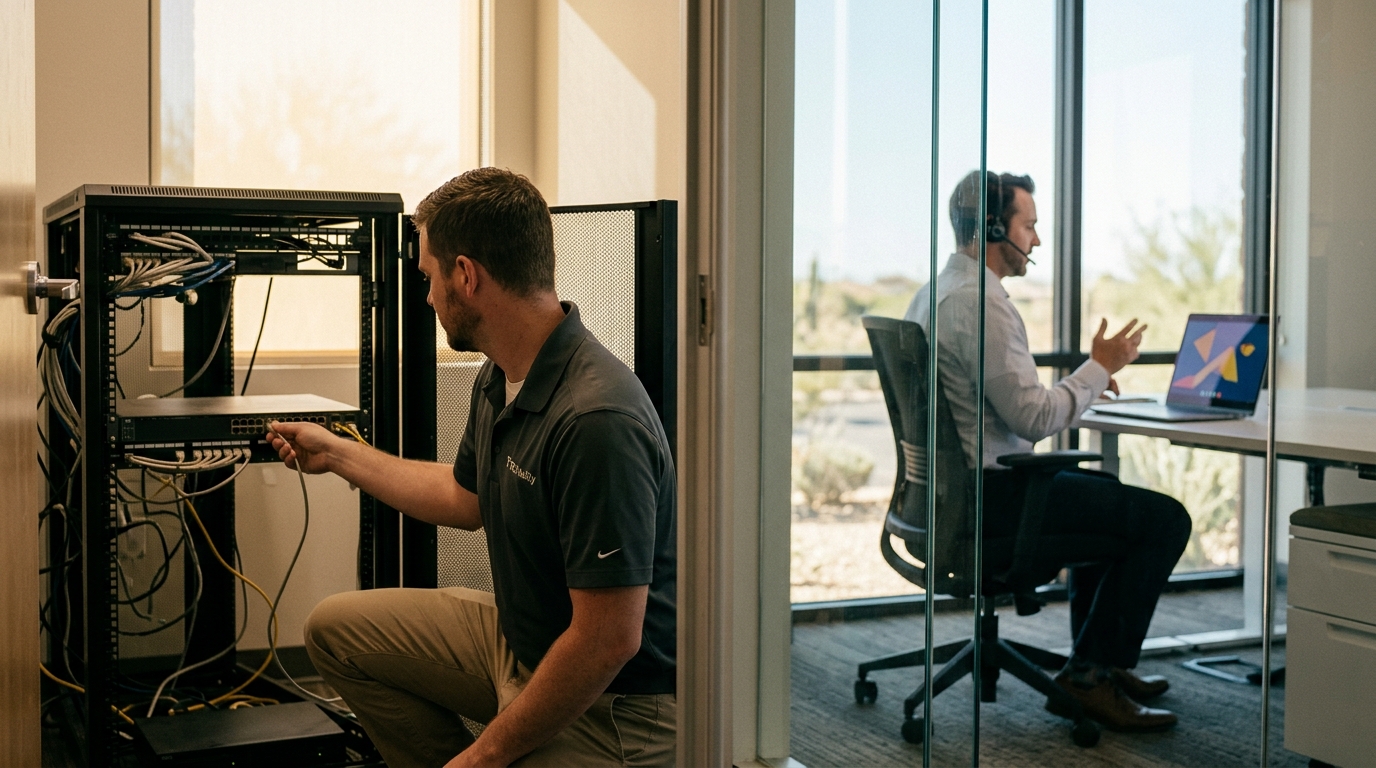
Technology support is not a one-size-fits-all solution. The fundamental difference lies in the physical presence of the technician versus digital connectivity. On-site support involves a technician physically visiting your business location to diagnose and repair hardware or network infrastructure. Remote support utilizes secure internet connections to access your systems from a distant location.
For Arizona companies, the choice often depends on the nature of the issue. Hardware failures require physical intervention, while software glitches can often be resolved instantly from afar. Understanding this distinction helps business owners allocate their IT budgets more effectively.
The Case for On-Site Expertise
There are specific scenarios where physical presence is non-negotiable. The most obvious is hardware repair. If a server rack fails or a network cable is damaged, no amount of remote access can fix it. This is where on-site technology services become invaluable.
Hardware and Infrastructure Repair
Arizona's climate can be harsh on electronic equipment. Dust, heat, and power fluctuations often lead to physical hardware degradation. When a workstation or server stops working, a technician must physically inspect the components. This includes replacing failed hard drives, reseating memory modules, or repairing physical network ports. Remote tools cannot replace a screwdriver or a multimeter.
Network Installation and Cabling
Building a robust network infrastructure requires physical labor. Running Cat6 or fiber optic cables through walls, installing wireless access points, and configuring local routers are tasks that demand an on-site presence. Network installations are foundational to business operations, and getting them right the first time prevents costly downtime later.

Physical Security Audits
Security is not just digital. Physical access to server rooms and workstations can be a vulnerability. On-site technicians can inspect physical locks, camera placements, and environmental controls like cooling systems. This holistic approach ensures that your digital assets are protected by physical barriers as well.
The Efficiency of Remote Services
Remote support has revolutionized the IT industry by offering speed and convenience. For many common issues, remote assistance is faster and more cost-effective than dispatching a technician.
Software Troubleshooting and Updates
Software issues, such as email configuration errors, printer driver conflicts, or operating system updates, can often be resolved in minutes remotely. A technician can access your desktop, apply patches, and restart services without leaving their office. This reduces the time your staff is idle, keeping productivity high.
Cost-Effectiveness and Speed
Remote support typically costs less because there are no travel fees or vehicle maintenance costs passed on to the client. Furthermore, the speed of response is often quicker. A remote technician can connect to your system within minutes of a ticket being opened, whereas an on-site visit might require scheduling a window hours or days in advance.
Data Backup and Recovery
Modern backup solutions, such as the 3-2-2 backup strategy, rely heavily on remote connectivity. Ensuring your data is replicated to offsite servers or cloud storage is a remote task. Remote technicians can monitor backup jobs and verify integrity without ever stepping foot in your office.
Why a Hybrid Approach Wins
While both models have merits, the most effective IT strategy for Arizona businesses is a hybrid approach. This model leverages the speed of remote support for software issues and the reliability of on-site service for hardware and infrastructure needs.
Managed Service Providers (MSPs) that offer both on-demand and on-site services provide the best of both worlds. They can resolve 80 percent of issues remotely, saving you money, while having a rapid response team ready for the critical 20 percent that requires physical intervention.
At TECHtality, we specialize in this comprehensive approach. We provide comprehensive MSP on-site, on-demand, and remote IT services to ensure that your business technology is always supported, regardless of the issue type.
Service Comparison Matrix
The following table summarizes the key differences between on-site and remote support to help you make an informed decision.
| Feature | On-Site Support | Remote Support |
|---|---|---|
| Response Time | Scheduled or Same-Day | Immediate (Minutes) |
| Cost | Higher (Travel + Labor) | Lower (Labor Only) |
| Best For | Hardware, Cabling, Setup | Software, Updates, Config |
| Security | Physical Access Control | Encrypted Digital Tunnel |
| Expertise | Hardware Diagnostics | Software Troubleshooting |
Key Takeaways
- Hybrid is Best: Combining remote and on-site services ensures comprehensive coverage for all IT needs.
- Hardware Needs Hands: Physical repairs, cabling, and server room maintenance require on-site technicians.
- Software Needs Speed: Remote support offers faster resolution for software glitches and updates.
- Arizona Climate Impact: Local environmental factors often necessitate regular physical hardware inspections.
- Backup Reliability: Remote connectivity is essential for modern offsite backup strategies like 3-2-2.
- Cost Efficiency: Remote support reduces travel costs, making it a budget-friendly option for routine issues.
- Local Expertise: Working with a local provider like TECHtality ensures faster on-site response times in Chandler and Scottsdale.
Frequently Asked Questions
What is the difference between on-site and remote IT support?
On-site support involves a technician physically visiting your business to fix hardware or network issues. Remote support uses secure internet connections to access your systems digitally to resolve software or configuration problems.
Which is more cost-effective for my Arizona business?
Remote support is generally more cost-effective for software issues because it eliminates travel fees. However, a hybrid model often provides the best overall value by addressing hardware needs efficiently.
Can remote technicians fix hardware problems?
No, remote technicians cannot physically replace broken parts or run new cables. Hardware issues require on-site intervention.
How does TECHtality handle technology relocation?
TECHtality provides end-to-end technology relocation services, including pre-visits, network rewiring, and safe equipment transport, ensuring a smooth transition for your business.
Is remote support secure?
Yes, reputable providers use encrypted tunnels and multi-factor authentication to ensure that remote access is secure and private.
What is the 3-2-2 backup strategy?
The 3-2-2 backup strategy involves keeping three copies of your data, on two different media types, with one copy stored offsite or in the cloud to ensure maximum data protection.
Do you offer services in Scottsdale?
Yes, TECHtality serves businesses across Arizona, including offices in Chandler and Scottsdale, providing both on-site and remote support.
Contact TECHtality for Seamless IT Support
Don't let technology issues slow down your business. Whether you need immediate remote assistance or scheduled on-site repairs, TECHtality is your trusted partner in Arizona. We offer comprehensive managed services tailored to your unique needs.
Contact TECHtality today to schedule a consultation or request a quote. Our team of experts is ready to help you optimize your technology infrastructure and ensure your business thrives in the digital landscape.