
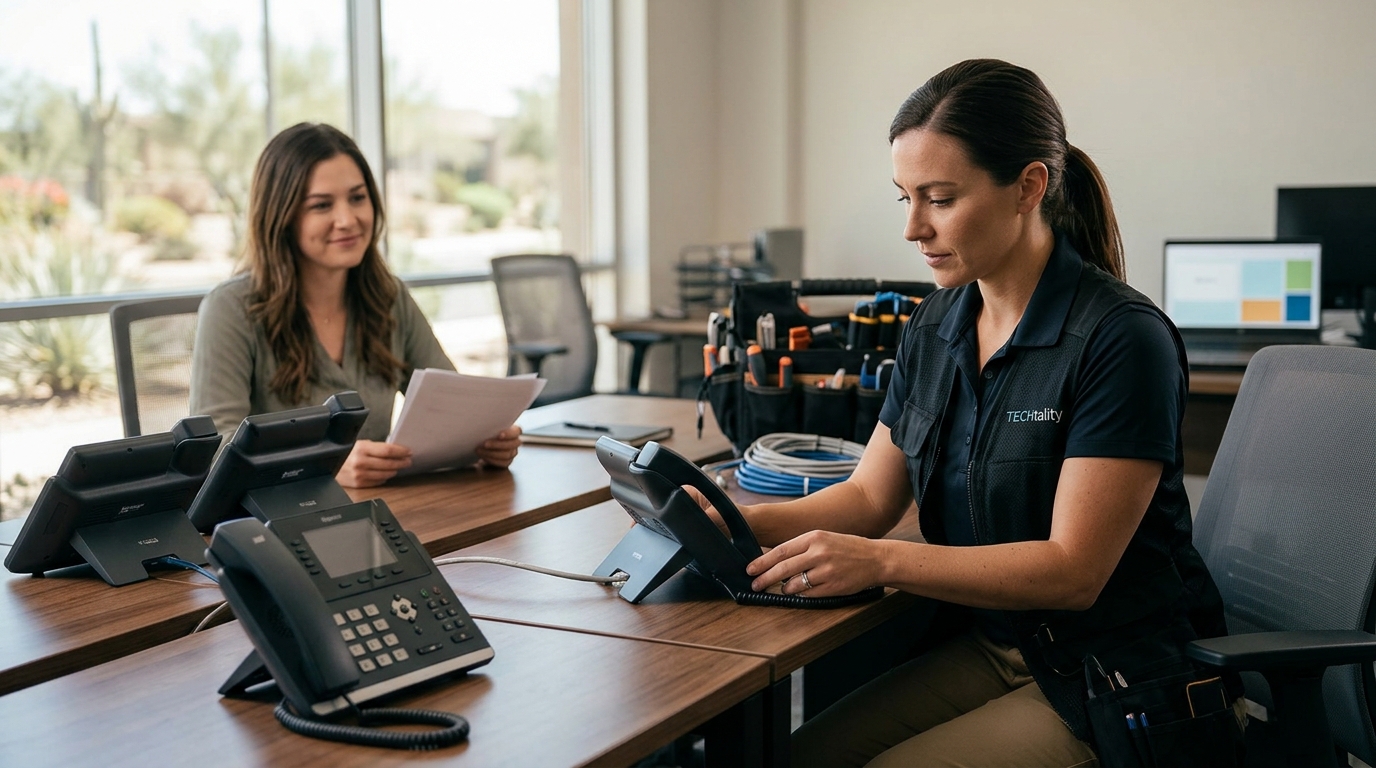
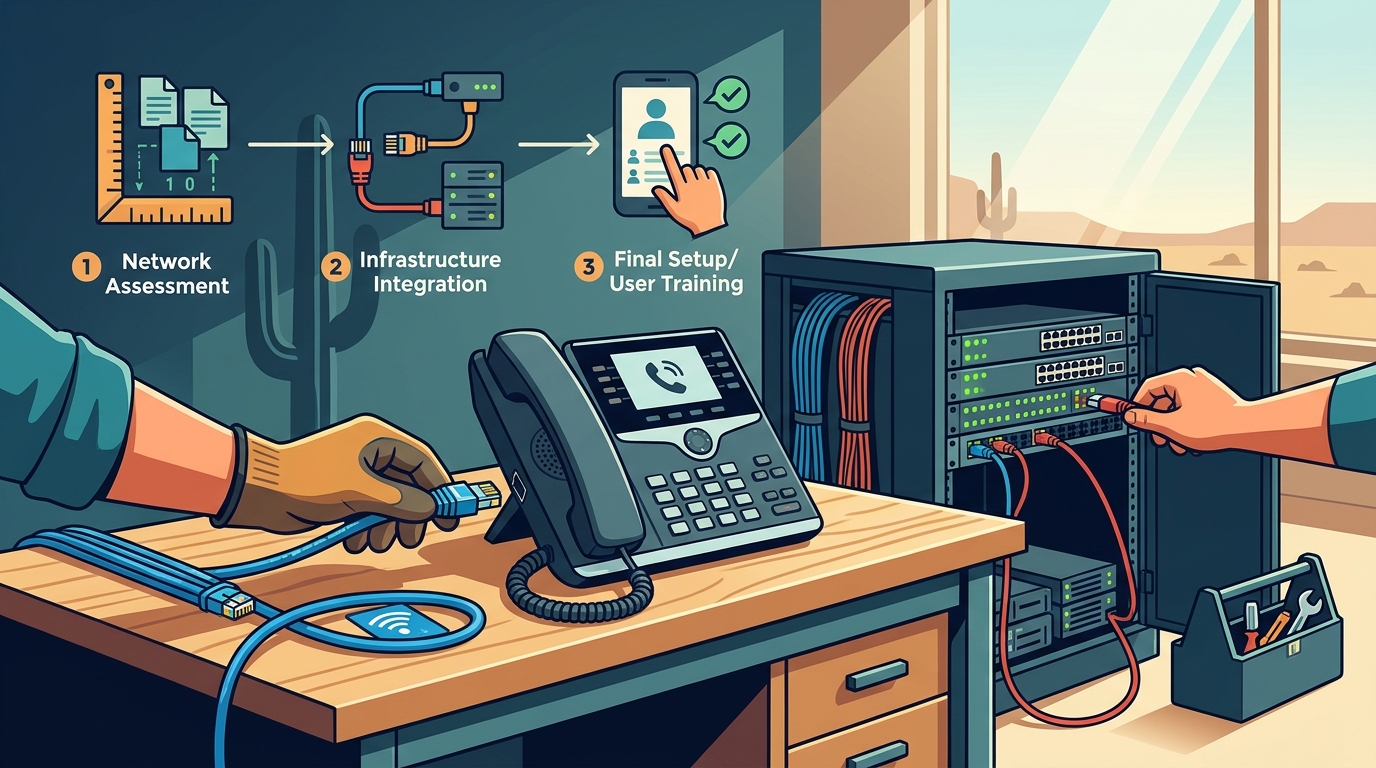
Professional VoIP installation in Chandler business offices involves a structured workflow that begins with network assessment and ends with user training. This process ensures that voice over internet protocol systems integrate seamlessly with existing infrastructure. TECHtality manages this lifecycle for local businesses, ensuring minimal disruption to daily operations. The goal is a stable, secure, and scalable communication system that supports your team's productivity.
Initial Network Assessment and Planning
The first phase of any professional installation is a comprehensive audit of your current network infrastructure. VoIP is network-dependent technology that requires consistent bandwidth and low latency to function correctly. A technician evaluates your internet service provider, router capabilities, and switch configurations. This step identifies potential bottlenecks before hardware is deployed.
Hardware Deployment and Configuration
QoS is a network management technique that prioritizes voice traffic over other data. Without it, large file downloads or video streaming can degrade call quality. The configuration process also involves setting up extensions, voicemail boxes, and auto-attendants. For businesses in the Chandler area, local technicians can perform this deployment on-site, ensuring that every device is physically secured and properly cabled.
Security Protocols and Data Protection
Security is a critical component of the installation process. VoIP systems are vulnerable to specific threats like toll fraud and eavesdropping. Professional installers implement encryption protocols to secure voice data in transit. They also configure firewall rules to block unauthorized access to the voice gateway. This layer of protection is essential for maintaining the integrity of business communications.
Additionally, the installation includes setting up multi-factor authentication for administrative access. This ensures that only authorized personnel can modify system settings. By integrating security measures during the initial setup, you avoid the risk of vulnerabilities that are harder to remediate later. The focus is on creating a secure foundation that protects both data and revenue.
Testing, Validation, and User Training
Before the system goes live, rigorous testing is conducted. Technicians perform end-to-end call tests to verify audio quality, latency, and packet loss. They also test failover scenarios to ensure that calls are routed correctly during internet outages. This validation phase confirms that the system meets the performance standards defined in the initial assessment.
Post-Installation Support and Monitoring
The installation process does not end when the phones are working. Ongoing monitoring is essential to maintain system health. Managed service providers use tools to track network performance and identify anomalies. If a device goes offline or a call quality issue arises, the monitoring system alerts the support team. This proactive approach allows for rapid resolution before users are significantly impacted.
Key Takeaways
- Network assessment is the foundation of a successful VoIP installation, ensuring adequate bandwidth and low latency.
- Quality of Service (QoS) configuration is critical to prioritizing voice traffic and maintaining call clarity.
- Security protocols, including encryption and multi-factor authentication, must be implemented during setup.
- Comprehensive testing and user training are essential to validate performance and ensure staff adoption.
- Ongoing monitoring and local support provide the best path to long-term system reliability.
Frequently Asked Questions
How long does a typical VoIP installation take?
The duration depends on the size of the office and the complexity of the network. A small office with five to ten phones can often be installed in a single day. Larger facilities with multiple floors or complex network requirements may take several days. The initial assessment helps provide a more accurate timeline.
Do I need to replace my existing internet service?
Not necessarily. Many existing internet plans are sufficient for VoIP. However, the assessment will determine if your current bandwidth and latency meet the requirements. If not, an upgrade to a business-grade internet service may be recommended to ensure consistent call quality.
Can I keep my existing phone numbers?
Yes, number porting is a standard part of the installation process. Your existing phone numbers can be transferred to the new VoIP system. This ensures continuity for your customers and clients. The process typically takes a few business days to complete.
What happens if the internet goes down?
Is on-site installation necessary?
On-site installation is recommended for most business offices. It allows technicians to physically configure hardware, run cables, and train staff in person. While some aspects can be done remotely, on-site presence ensures that all physical components are correctly installed and secured.
Conclusion
Professional VoIP installation is a multi-stage process that requires careful planning and execution. From network assessment to post-installation monitoring, each step plays a vital role in ensuring a reliable communication system. TECHtality provides the expertise and local presence needed to manage this process effectively for Chandler businesses. To discuss your specific installation needs, for a consultation.