

Businesses that rely on continuous digital operations face a critical decision when selecting IT support. According to recent industry data, organizations using managed services experience 40% fewer downtime incidents compared to those relying on reactive break-fix models. This statistic highlights the fundamental shift in how modern enterprises prioritize network stability. Choosing the wrong support structure can lead to cascading failures, lost revenue, and compromised security. This article compares the two primary models to help you determine the best fit for your operational needs.
Understanding the Core Models
To make an informed choice, you must first define the operational mechanics of each approach. Managed IT Services is a proactive model where a third-party provider monitors, maintains, and manages your IT infrastructure for a fixed monthly fee. This approach focuses on prevention, ensuring systems remain secure and efficient before issues arise.
In contrast, Break-Fix Support is a reactive model where you pay for IT services only when something breaks. This traditional approach lacks ongoing monitoring. You call a technician when a server fails or a network goes down, and you are billed for the hours spent on the repair. While it seems cost-effective initially, it often leads to unpredictable expenses.
The fundamental difference lies in the philosophy of maintenance. Managed services treat IT as a strategic asset, while break-fix treats it as a utility to be repaired only when necessary. For businesses aiming for long-term stability, the proactive nature of managed services typically offers superior reliability.
Cost Structure Analysis
Financial planning is a primary driver for most IT decisions. Understanding the budget implications of each model is essential for accurate forecasting.
Predictable Monthly Budgeting
Managed services operate on a subscription basis. This allows finance teams to predict IT costs with high accuracy. You pay a flat rate per device or per user, regardless of how many tickets are opened. This predictability eliminates the shock of unexpected repair bills. It also aligns IT spending with operational budgets rather than emergency funds.
Variable and Unpredictable Expenses
Break-fix models charge hourly rates for every incident. While the upfront cost may appear lower, the total cost of ownership often exceeds managed services over time. A single major server failure can cost thousands of dollars in labor and lost productivity. According to market analysis, small businesses spend an average of 20% more on IT costs when using break-fix due to emergency premiums and repeated minor issues.
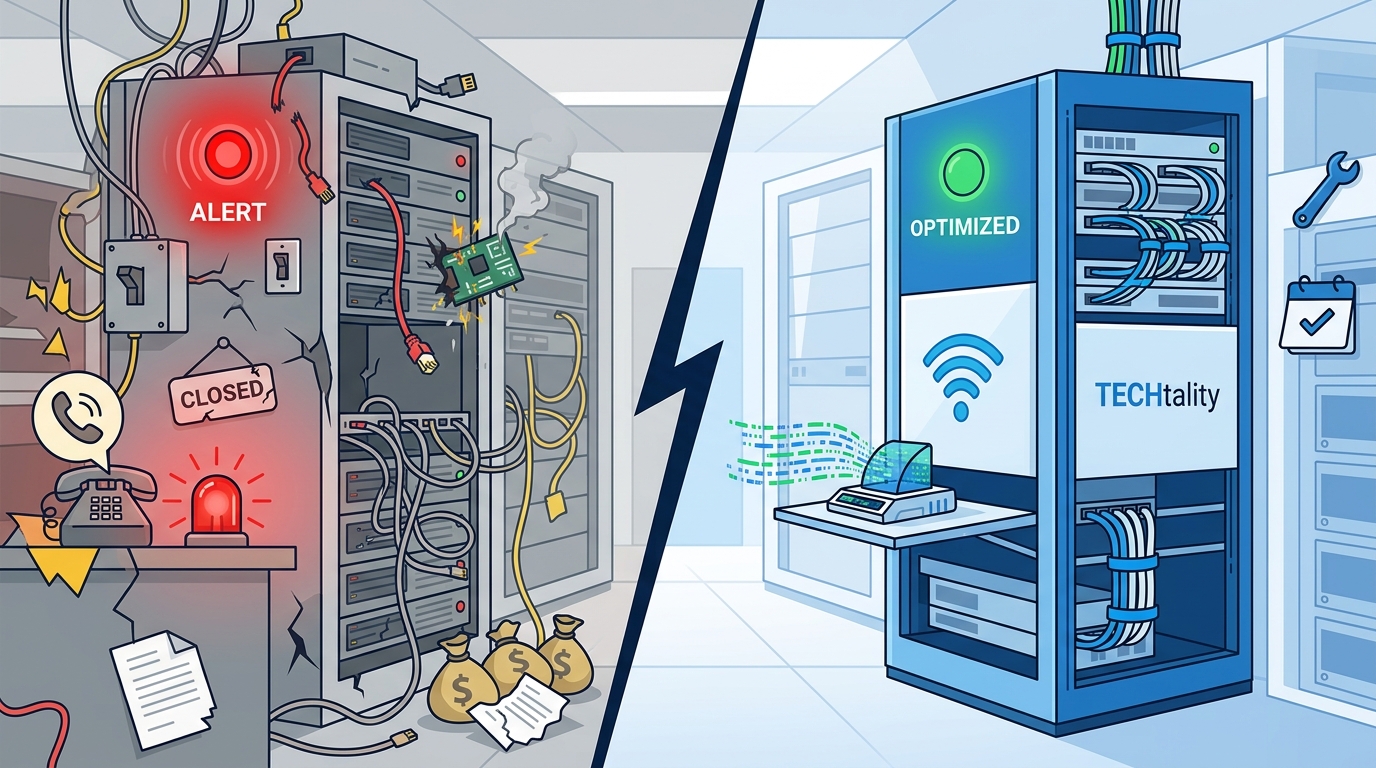
Hidden Costs of Downtime
When comparing network support, you must account for the cost of downtime. Break-fix models often have slower response times because they are not prioritized. Every hour of downtime represents lost employee productivity and potential customer churn. Managed services typically include priority support, reducing the financial impact of any technical failure.
Security and Compliance Implications
Security is not just an IT issue; it is a business survival metric. The approach to security varies drastically between the two models.
Proactive Threat Mitigation
Managed service providers (MSPs) implement continuous monitoring and automated patch management. They identify vulnerabilities before attackers can exploit them. This proactive stance is critical in an era where ransomware attacks are increasing by 100% annually. By maintaining up-to-date security protocols, MSPs reduce the attack surface significantly.
Reactive Vulnerability Management
Break-fix providers typically address security only after a breach or a specific request. They do not monitor your network for suspicious activity. This leaves your business exposed to silent threats that can compromise sensitive data. Without regular audits and updates, your systems become outdated and vulnerable to known exploits.
Regulatory Compliance
Industries such as healthcare and finance require strict adherence to regulations like HIPAA or GDPR. Managed services often include compliance management as part of their service package. They ensure your IT infrastructure meets legal standards through documented processes and regular reporting. Break-fix models rarely offer this level of structured compliance support.
Scalability and Growth Alignment
Your IT support model must grow with your business. Rigid support structures can hinder expansion.
Flexible Resource Allocation
Managed services allow you to scale up or down easily. Adding new users, devices, or cloud services is seamless. The provider adjusts the monthly fee to reflect the new scope. This flexibility supports rapid growth without the need for complex hiring processes or infrastructure overhauls.
Limitations of Reactive Support
Break-fix support struggles with scalability. As your business grows, the volume of IT issues increases. Managing these issues reactively becomes chaotic and inefficient. You may find yourself constantly searching for new technicians as your needs change. This lack of continuity can disrupt business operations during critical growth phases.
Strategic IT Planning
Managed service providers often act as a virtual CIO. They help align IT strategy with business goals. This partnership ensures that technology investments drive growth rather than hinder it. Break-fix providers rarely offer strategic guidance, leaving you to navigate complex IT decisions alone.
Service Level Agreements (SLAs)
Accountability is a key differentiator in network support. SLAs define the expected performance and response times.
Guaranteed Performance Metrics
Managed service contracts include strict SLAs. These agreements guarantee response times, resolution times, and system uptime percentages. If the provider fails to meet these metrics, they often provide service credits. This accountability ensures that your IT infrastructure receives the attention it requires.
Lack of Formal Guarantees
Break-fix providers rarely offer formal SLAs. Response times depend on technician availability and the severity of the issue. You may face long wait times during peak periods. Without contractual guarantees, you have little recourse if support is delayed.
Impact on Business Continuity
Fast resolution times are critical for business continuity. Managed services prioritize critical issues to minimize downtime. This focus on speed and efficiency protects your revenue streams and customer relationships. Break-fix models lack this prioritization framework.
Making the Final Decision
Choosing between managed services and break-fix depends on your specific business context. Consider the following comparison table to evaluate your options.
| Feature | Managed IT Services | Break-Fix Support |
|---|---|---|
| Pricing Model | Fixed monthly subscription | Hourly rate per incident |
| Approach | Proactive and preventive | Reactive and corrective |
| Security | Continuous monitoring and patching | On-demand security fixes |
| Scalability | Highly flexible and seamless | Complex and disruptive |
| SLA Guarantees | Yes, with performance credits | Rarely offered |
Key Takeaways
- Managed services reduce downtime by up to 40% compared to reactive models.
- Fixed monthly pricing provides financial predictability and budget stability.
- Proactive security monitoring is essential for preventing ransomware and data breaches.
- Scalability is significantly easier with subscription-based IT support.
- Formal SLAs ensure accountability and faster response times for critical issues.
- Break-fix models may seem cheaper initially but often cost more over time.
- Strategic IT planning aligns technology investments with long-term business goals.
Frequently Asked Questions
Is managed IT support more expensive than break-fix?
While the monthly fee may seem higher than occasional break-fix bills, managed services often result in lower total costs. They prevent expensive emergencies and provide predictable budgeting. The cost of downtime and security breaches usually outweighs the subscription fee.
Can I switch from break-fix to managed services later?
Yes, you can transition from break-fix to managed services at any time. The migration process involves auditing your current infrastructure and setting up monitoring tools. Most providers offer a smooth transition plan to ensure no data loss or service interruption.
What types of businesses benefit most from managed services?
Small to medium-sized businesses (SMBs) benefit significantly. They lack the resources for in-house IT teams but require enterprise-level support. Managed services provide access to expert knowledge and advanced tools at a fraction of the cost of hiring full-time staff.
How do managed services handle data backups?
Managed service providers typically include automated, off-site data backup and recovery in their packages. They ensure that your data is regularly backed up and can be restored quickly in the event of a failure or cyberattack. This is a critical component of business continuity planning.
What is the typical response time for managed service providers?
Response times vary based on the severity of the issue and the agreed-upon SLA. Critical issues are often addressed within one to four hours. Standard issues may have a 24-hour resolution target. These guarantees are outlined in the service contract.
Do managed services include software updates?
Yes, managed services include regular software and operating system updates. These updates are crucial for security and performance. Providers automate the patching process to ensure all devices are up-to-date without disrupting your workflow.
Ready to Optimize Your Network Support?
Stop reacting to IT problems and start preventing them. Techtality offers comprehensive managed IT services designed to enhance your network reliability and security. Our team of experts provides proactive monitoring, strategic planning, and rapid response support. Contact us today to schedule a consultation and discover how we can support your business growth. Visit our about page to learn more about our mission and values. Explore our blog for more insights on IT best practices. Secure your future with a free demo of our management platform.