

Modern businesses are rapidly abandoning legacy copper lines in favor of digital communication. According to recent industry data, the global VoIP market is projected to grow significantly, with millions of businesses making the switch to reduce costs and increase flexibility. This shift is not just a trend but a fundamental change in how companies operate. Understanding the technical and logistical requirements of this transition is critical for maintaining uninterrupted business continuity.
Step 1: Assess Your Current Infrastructure
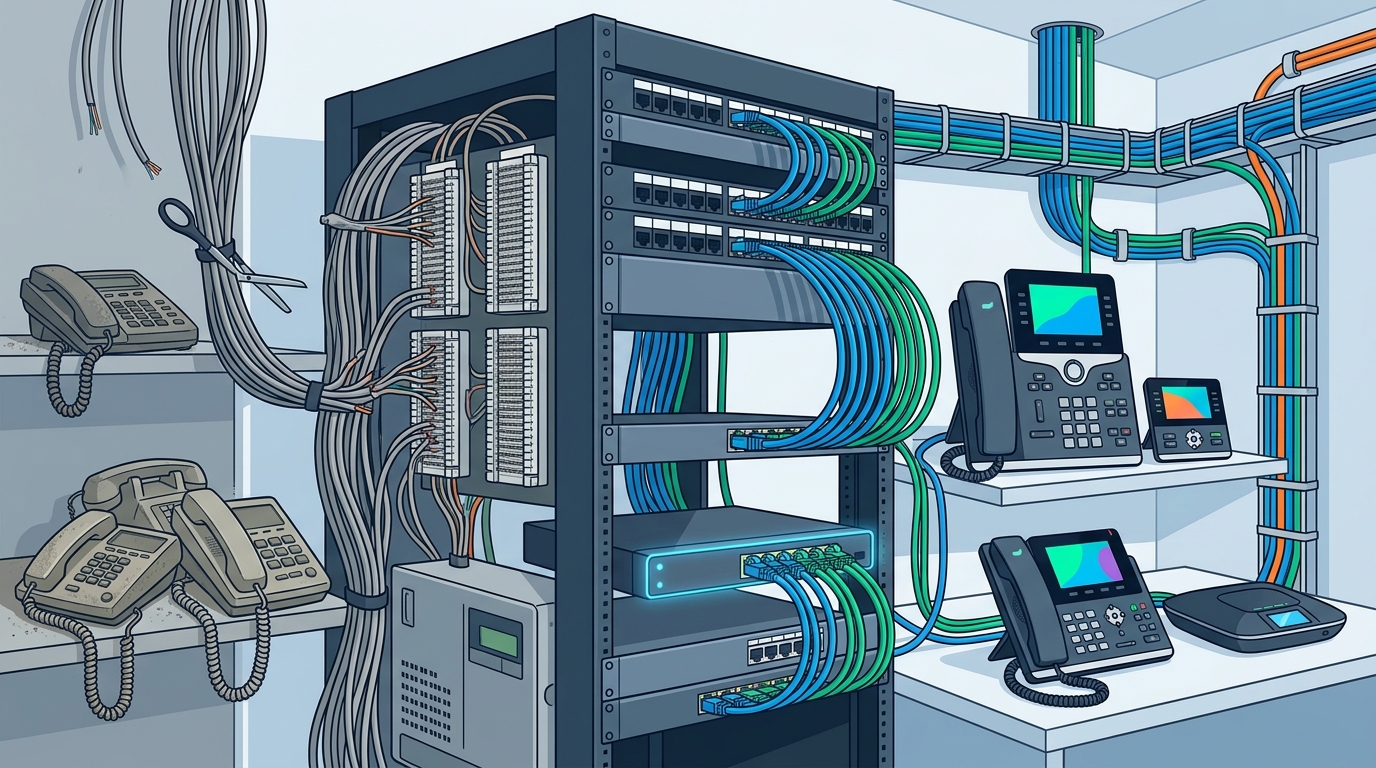
Before you can move forward, you must understand what you are leaving behind. Legacy PBX systems are large, require lots of power, and are very expensive to maintain. They also rely on physical copper phone lines that are prone to noise and difficult to reroute during emergencies. Federal Communications Commission regulations have shifted significantly toward IP-based communications, making legacy support increasingly scarce.
VoIP is defined as the technology that allows you to make voice calls using a broadband Internet connection instead of a regular (or analog) phone line. To transition successfully, you need to audit your current internet bandwidth. If your connection is insufficient, your calls will suffer from latency, jitter, and packet loss. Ensure your network can handle both data and voice traffic simultaneously without degradation.
Step 2: Choose the Right VoIP Provider
Selecting a provider is the most critical decision in your transition. You need a partner who offers enterprise-class features without the enterprise-class complexity. Look for providers that offer both hosted and on-premise options depending on your control preferences. Gartner highlights that flexibility and scalability are the top drivers for VoIP adoption in 2024 and beyond.
At TECHtality, we provide Business Class VoIP Hosting Services at competitive rates along with dedicated on-site support. Our hosted enterprise voice solution is billed monthly, allowing you to add or remove services at any time with zero hassles. This model eliminates the need for long-term contracts and reduces the burden of software upgrades. Forbes notes that businesses saving hundreds or thousands a month for telephone service are seeing a rapid ROI on their communication infrastructure.
Step 3: Select Appropriate Hardware
You have two main paths for hardware: IP phones or softphones. IP phones provide a dedicated physical interface, which many employees prefer for reliability and ease of use. Softphones allow you to make calls from your computer or mobile device, offering maximum flexibility for remote workers. Cisco remains a leader in defining the standards for enterprise VoIP hardware compatibility.
If you choose to keep your existing analog phones, you will need an Analog Telephone Adapter (ATA). However, upgrading to IP phones often unlocks advanced features like video conferencing, instant messaging, and integration with CRM systems. TECHtality specializes in installing and configuring these devices to ensure they are ready for immediate use. Our team ensures that your wireless access points are strategically placed for optimal coverage, offering your business a fast and reliable Wi-Fi experience.
Step 4: Plan the Migration Strategy
A poorly planned migration can lead to downtime, which costs businesses an average of $5,600 per minute according to IDC. You must decide whether to port your existing numbers or acquire new ones. Porting is generally seamless but requires accurate documentation of your current service details. TECHtality handles the porting process to ensure your business continuity is never compromised.
Consider the timing of your switch. Avoid migrating during peak business hours or major sales periods. Instead, schedule the cutover during a weekend or holiday. TECHtality provides end-to-end technology relocation services, ensuring that every detail is meticulously handled from planning to execution. Our focus is on precision and efficiency, minimizing downtime so your technology is up and running as quickly as possible.
Step 5: Test and Optimize
Once the system is live, rigorous testing is essential. Have each employee make test calls to internal and external numbers. Check for audio clarity, dial tone responsiveness, and feature functionality. NIST standards emphasize the importance of quality of service (QoS) settings to prioritize voice traffic over other data types.
Train your staff on the new system. Many employees may be unfamiliar with features like voicemail-to-email or call forwarding. TECHtality offers comprehensive training to ensure your team is comfortable with the new platform. We also provide ongoing support to address any issues that arise during the initial weeks of operation. Our goal is to help you run your business communications much easier than legacy PBX systems.
Key Takeaways
- VoIP eliminates the need for expensive legacy PBX hardware and copper lines.
- Hosted VoIP solutions offer monthly billing with no long-term contracts.
- TECHtality has over 40 years of experience supporting Arizona businesses.
- Proper bandwidth assessment is critical to prevent call quality issues.
- Porting existing phone numbers is a standard part of the migration process.
- On-site support is available to handle hardware installation and configuration.
- Training staff on new features ensures higher adoption and productivity.
Frequently Asked Questions
How long does it take to switch to VoIP?
The technical switch can often be completed in a single day. However, planning and testing may take several weeks to ensure no downtime occurs during business hours.
Can I keep my current phone number?
Yes, you can port your existing phone numbers to your new VoIP provider. This process is regulated by the FCC to ensure consumer rights are protected.
Do I need new internet service?
You do not necessarily need new internet service, but you must have sufficient bandwidth and QoS settings to handle voice traffic without degradation.
What is the cost of hosted VoIP?
Hosted enterprise voice services can start at affordable monthly rates, often around $29.99 per user, depending on the features and provider.
Is VoIP secure?
Yes, modern VoIP systems use encryption and secure protocols to protect your communications from interception and fraud.
Can I use VoIP for faxing?
Yes, many VoIP providers offer Fax to Email services, which is more reliable than traditional analog faxing over IP networks.
What happens if my internet goes down?
Most VoIP systems can be configured with failover options, such as redirecting calls to mobile phones or a backup internet connection.
Ready to Upgrade Your Office Communications?
Transitioning to VoIP is a strategic move that enhances productivity and reduces costs. TECHtality is ready to guide you through every step of the process. From initial assessment to final optimization, we provide the expertise you need. Contact TECHtality today to schedule your consultation and start your journey toward seamless business communication.