
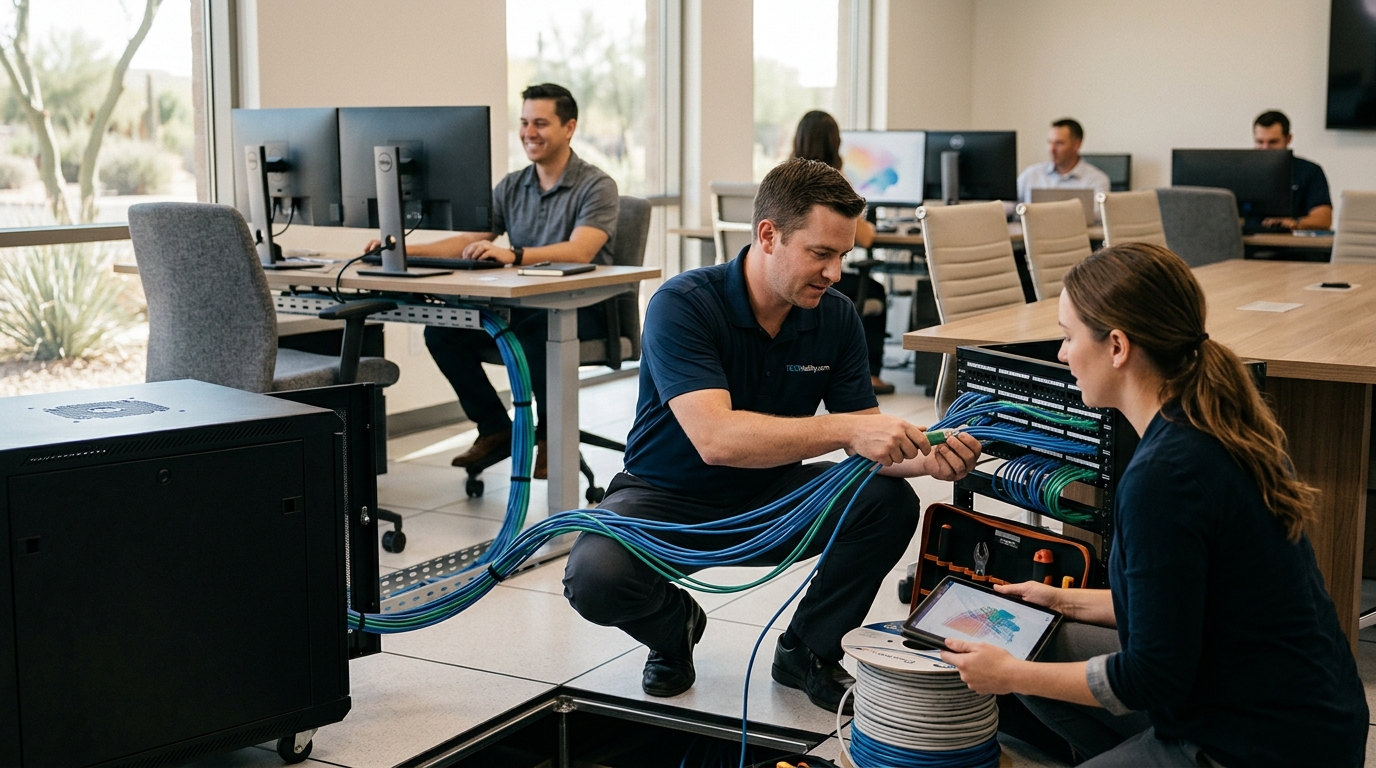
Businesses relying on legacy copper infrastructure frequently experience bandwidth bottlenecks that directly impact daily operations. According to industry research, over sixty percent of enterprise network failures trace back to physical layer cabling faults rather than software configuration errors. Upgrading your physical wiring architecture eliminates signal degradation and reduces latency across critical business applications. This process requires a systematic evaluation of existing pathways, modern termination standards, and professional deployment protocols. Organizations that prioritize structured cabling investments consistently report higher uptime metrics and faster data transmission rates across distributed workspaces.
Assessing Your Current Cabling Infrastructure
Before deploying new hardware, you must document every existing patch panel and wall jack. Legacy Category 5 cables often struggle to maintain consistent throughput when modern cloud applications demand continuous bandwidth. Network engineers typically perform cable certification testing to identify cross-talk interference and impedance mismatches. You should label every termination point to prevent accidental disconnections during routine maintenance. This documentation phase establishes a reliable baseline for your modernization project.
Identifying Physical Bottlenecks
Damaged conduits and improperly routed cables create electromagnetic interference that disrupts data packets. You will notice increased packet loss when heavy files transfer across outdated pathways. Regular visual inspections reveal frayed insulation and crushed connectors that require immediate replacement. Addressing these physical defects prevents recurring connectivity drops during peak business hours.
Upgrading to Category 6a and Fiber Optics
Modern office environments require higher bandwidth capacity to support video conferencing and cloud-based enterprise software. Category 6a cabling delivers reliable speeds up to ten gigabits per second over distances of one hundred meters. Fiber optic pathways eliminate electrical interference entirely while supporting significantly longer transmission ranges. Businesses that transition to these modern standards experience measurable improvements in application responsiveness. This hardware upgrade forms the backbone of any successful network modernization strategy.
Evaluating Fiber Optic Options
Single-mode fiber cables excel in long-distance backbone connections between server rooms and distribution frames. Multi-mode variants provide cost-effective solutions for shorter intra-office runs. You must match your transceiver modules to the specific fiber type to avoid signal attenuation. Proper termination techniques ensure maximum light transmission and minimal data loss across your infrastructure.
Implementing Structured Cabling Standards
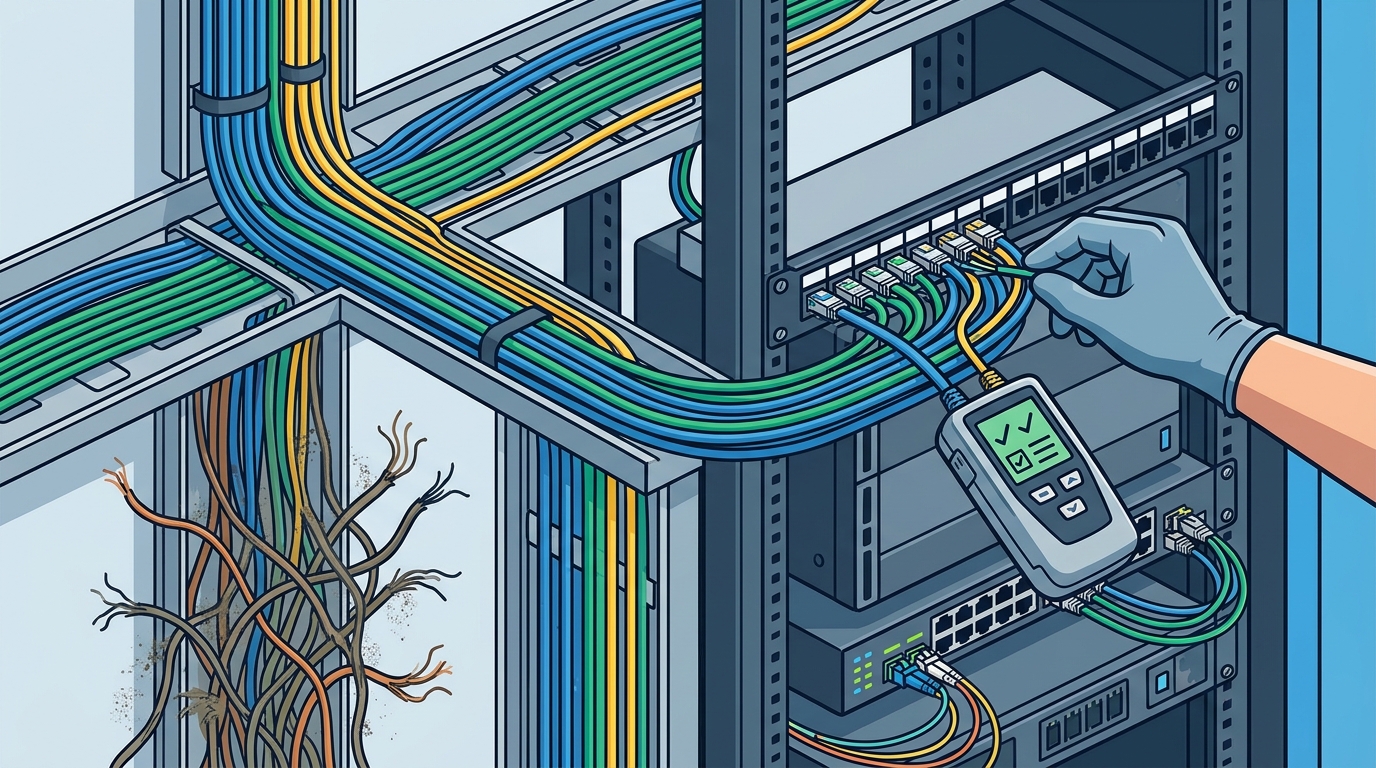
Structured cabling is a standardized framework that organizes voice, data, and multimedia pathways into a unified physical architecture. This methodology eliminates ad-hoc patching and creates predictable maintenance workflows for your IT department. You should route all cables through dedicated racks with proper bend radius compliance. Labeling each cable end according to TIA-568 guidelines simplifies future troubleshooting procedures. Organizations that adopt these protocols consistently reduce mean time to repair by nearly forty percent. According to federal telecommunications guidelines, standardized labeling practices improve technician efficiency and reduce operational downtime. You must invest in high-quality patch panels to maintain signal integrity across your entire floor plan.
Managing Cable Organization
Crowded server racks restrict airflow and increase equipment failure rates. You should utilize vertical cable managers to route connections cleanly without creating tension points. Proper strain relief prevents accidental disconnections during routine equipment swaps. Maintaining clear pathways also simplifies future expansion projects without disrupting active services.
Integrating Wireless Access Point Architecture
Wireless access points is a distributed network of radio transceivers that extends your wired infrastructure to mobile devices and IoT sensors. You must position these units to avoid physical obstructions like metal filing cabinets and concrete walls. Modern enterprise-grade access points support simultaneous multi-gigabit connections without degrading performance. You should conduct site surveys to map signal strength across your entire facility. This planning phase ensures consistent coverage for every workstation and conference room. Your team can optimize channel allocation to prevent interference from neighboring buildings. We offer comprehensive wireless deployment services to guarantee seamless connectivity. Explore our complete service portfolio to learn how we handle enterprise wireless deployments.
Optimizing Signal Coverage
Strategic placement eliminates dead zones that frustrate remote workers and visiting clients. You should adjust transmit power levels to match your office square footage. Channel bonding techniques maximize available bandwidth for high-traffic areas. Regular firmware updates patch security vulnerabilities and improve connection stability. These adjustments require careful planning to avoid disrupting active business operations.
Scheduling Professional Network Audits
Professional audits provide an unbiased evaluation of your entire physical network ecosystem. Certified technicians utilize advanced testing equipment to verify compliance with industry performance benchmarks. You will receive detailed reports highlighting weak points and recommending targeted upgrades. Regular assessments prevent minor issues from escalating into catastrophic system failures. Businesses that schedule quarterly reviews consistently maintain higher uptime percentages. According to recent infrastructure reports, proactive maintenance reduces annual IT support costs by nearly thirty percent. You should partner with experienced providers who understand Arizona commercial building codes. Contact our support team to schedule your comprehensive infrastructure review today.
Selecting Reliable Vendors
Verify that your chosen provider holds relevant industry certifications and carries adequate liability insurance. You should request detailed project timelines and warranty terms before signing agreements. Transparent pricing structures prevent unexpected expenses during complex installations. Review past client portfolios to confirm experience with similar office layouts. These due diligence steps protect your organization from substandard workmanship.
Comparing Modern Cabling Solutions
| Cabling Standard | Maximum Bandwidth | Optimal Use Case | Implementation Complexity |
|---|---|---|---|
| Category 5e | One gigabit per second | Legacy voice lines | Low |
| Category 6a | Ten gigabits per second | Modern office workstations | Moderate |
| Single-mode Fiber | Unlimited theoretical bandwidth | Building backbone connections | High |
| Multi-mode Fiber | Forty gigabits per second | Data center interconnects | High |
Key Takeaways
- Legacy copper cables frequently cause bandwidth bottlenecks that disrupt cloud application performance.
- Category 6a infrastructure delivers reliable ten gigabit speeds across standard office distances.
- Fiber optic pathways eliminate electrical interference while supporting significantly longer transmission ranges.
- Structured cabling frameworks organize voice and data pathways into predictable maintenance workflows.
- Professional network audits identify weak points and recommend targeted infrastructure upgrades.
- Regular wireless site surveys prevent dead zones that frustrate remote workers and visiting clients.
Frequently Asked Questions
Why does my office network drop connections during peak hours?
Network congestion typically stems from outdated cabling that cannot handle modern bandwidth demands. Legacy Category 5 cables struggle to maintain consistent throughput when multiple devices transmit data simultaneously. Upgrading to Category 6a or fiber optic pathways resolves these bandwidth bottlenecks. You should also verify that your switches support proper Quality of Service prioritization.
How often should I inspect my physical cabling infrastructure?
Businesses should conduct visual inspections quarterly to identify frayed insulation or crushed connectors. Professional certification testing should occur annually to verify compliance with industry performance benchmarks. Regular assessments prevent minor issues from escalating into catastrophic system failures. You can schedule routine maintenance through our dedicated support portal. View our maintenance packages to find the right support tier for your organization.
Can I upgrade my wiring without shutting down my business operations?
Professional technicians utilize advanced migration strategies to maintain continuous connectivity during hardware swaps. You should schedule upgrades during off-peak hours to minimize workflow disruptions. Our team coordinates phased deployments that keep critical servers online throughout the transition. You can learn more about our migration protocols by reviewing our detailed project guides. Review our backup strategies to ensure data safety during upgrades.
What certifications should my IT vendor possess?
Your chosen provider must hold relevant industry certifications and carry adequate liability insurance. You should verify that technicians complete manufacturer-specific training programs. Transparent pricing structures prevent unexpected expenses during complex installations. Review past client portfolios to confirm experience with similar office layouts. These due diligence steps protect your organization from substandard workmanship.
How does wireless integration affect wired network performance?
Wireless access points is a distributed network of radio transceivers that extends your wired infrastructure to mobile devices and IoT sensors. You must position these units to avoid physical obstructions like metal filing cabinets and concrete walls. Modern enterprise-grade access points support simultaneous multi-gigabit connections without degrading performance. You should conduct site surveys to map signal strength across your entire facility. This planning phase ensures consistent coverage for every workstation and conference room.
Secure Professional Installation Today
Improving office wiring requires precise planning, certified hardware, and experienced technicians who understand commercial building constraints. You should partner with a trusted Arizona technology partner to execute your modernization project without disrupting daily operations. Our team has supported local businesses since nineteen eighty-three with comprehensive managed support services. We handle everything from initial site surveys to final certification testing. Contact TECHtality to schedule your complimentary infrastructure assessment. Call (480) 988-0900 to speak directly with a network specialist. Visit our services page to explore our complete enterprise solutions. Explore our VoIP PBX services to unify your communication infrastructure. Review our technology relocation protocols for seamless office transitions.